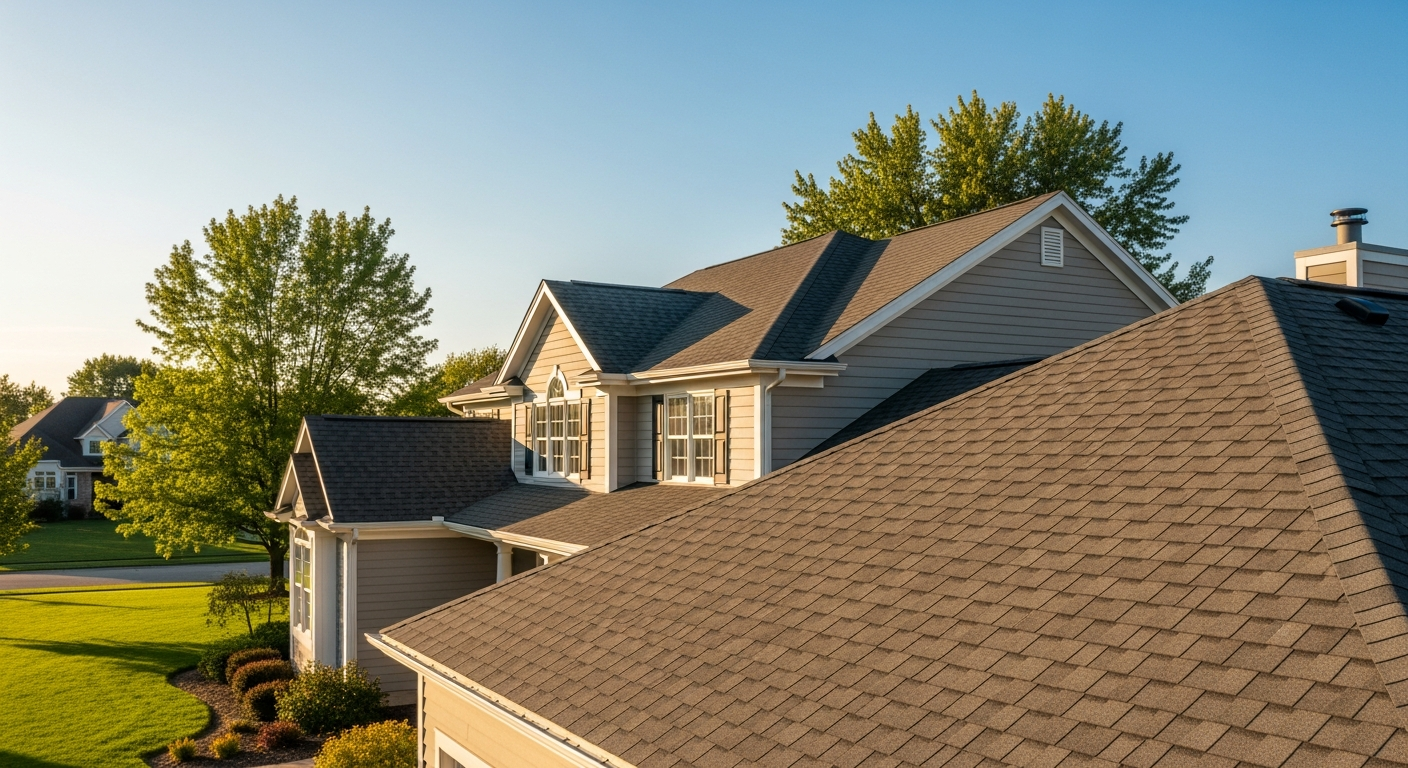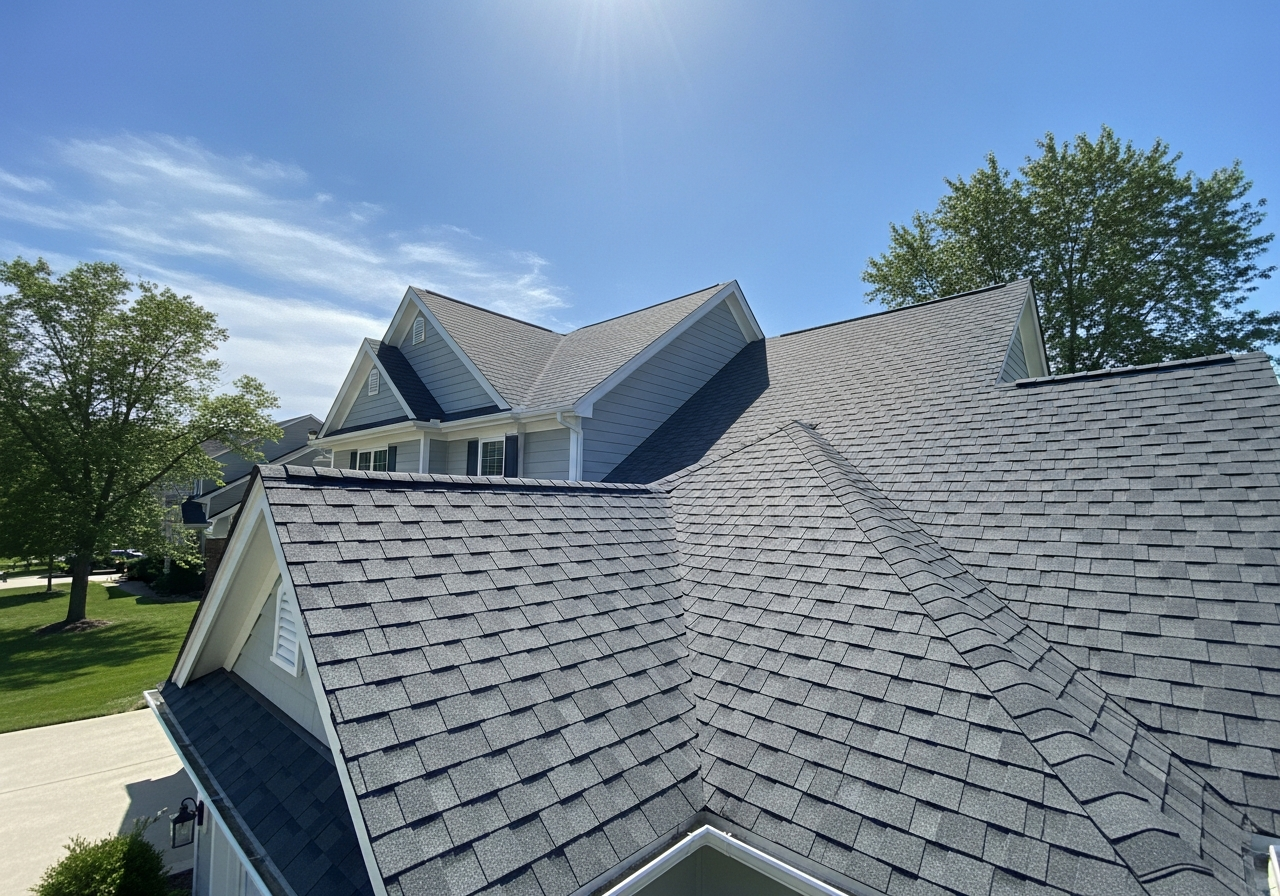

A roof repair fixes a limited, identified failure, while a roof replacement removes the whole roof covering because the system as a whole is near the end of its life.
A leak or a few missing shingles doesn't automatically mean you need a new roof — but patching a worn-out roof is throwing money away. Here's how to tell the difference for your St. Louis home.
It's one of the most common questions we hear from homeowners across St. Louis, Fenton, and Chesterfield: 'Can this roof be repaired, or do I need a whole new one?' It's an important question, because the wrong answer is expensive either way. Replace a roof that had ten good years left and you've wasted thousands. Keep patching a roof that's failing and you'll pay for repeated repairs — plus the interior water damage that comes when the patches don't hold. This guide walks through exactly how we help Missouri homeowners make that call.
When a Repair Is the Right Call
If your roof is structurally sound and simply took localized damage, a repair is usually the smart, cost-effective choice. Repairs make sense when:
- The roof is less than 15 years old and otherwise in good shape
- Damage is confined to one area — a few shingles blown off in a wind storm, flashing that pulled away from a chimney, or a single spot where a branch hit
- There's a leak with a clear, single source that hasn't spread across the deck
- The rest of the shingle field still has full granule coverage and lies flat
- You're preparing to sell soon and just need to resolve a specific inspection item
When Replacement Is the Smarter Investment
Sometimes a repair only delays the inevitable — and every repair dollar spent on a dying roof is money you won't get back. Replacement is usually the better long-term decision when:
- The roof is 20+ years old (most St. Louis asphalt roofs last 20–30 years)
- Shingles are curling, cupping, or losing granules across large sections, not just one spot
- You've had multiple leaks in different areas — a sign the whole system is aging out
- There's widespread hail bruising after a Missouri storm (insurers often approve full replacement in these cases)
- The roof deck is soft, sagging, or shows rot, which means the problem is under the shingles
- You're already on your second or third repair in a few years
How do repair and replacement costs compare?
When a decision is close, compare the likely useful life of each option. Add up your roof repairs from the last few years. Include the proposed repair, any hidden damage, and work you might need soon. Then compare that total with a replacement quote covering the same problems. A small repair can make sense on an otherwise sound roof. Repeated repairs on a worn roof can cost more without resolving the underlying problem. Ask the roofer to explain what will remain after a repair and what a replacement would change. Get both options in writing, with their exclusions and warranty terms.
How Missouri Weather Tips the Scale
St. Louis roofs live a hard life. We get the full range: 100-degree summer heat that bakes shingles, freeze-thaw cycles and ice dams in winter, and the notorious spring hail and straight-line wind events that roll through Jefferson, Franklin, and St. Louis counties. That constant expansion and contraction ages a roof faster than the manufacturer's lab rating suggests. A roof in our climate that's approaching 20 years is often closer to the end than an identical roof in a milder region — which is why the age factor matters so much here.
Don't Overlook the Insurance Angle
If your roof was damaged in a hail or wind storm, the repair-vs-replace question may not be entirely yours to answer — it depends on what your homeowner's policy covers. When an adjuster documents enough storm-related damage, many policies will pay for a full replacement rather than a patch, since matching new shingles to weathered old ones is often impossible. Before you pay out of pocket for a repair after a storm, it's worth having a contractor inspect for hail bruising and wind damage you may not see from the ground. We routinely help homeowners in Pacific, Eureka, and House Springs document damage properly so nothing legitimate gets missed.
What a Proper Roof Assessment Includes
A trustworthy contractor won't quote a replacement without actually evaluating whether you need one. When we inspect a roof, we look at the whole system — not just the shingles:
- Shingle condition: granule loss, curling, cracking, and impact bruising
- Flashing at chimneys, valleys, and roof penetrations
- The condition of the decking underneath for soft spots or rot
- Attic ventilation and any signs of trapped moisture
- Age and remaining life of the existing materials
- Whether recent storm damage may be insurable
Get an Honest Answer, Not a Sales Pitch
The hard part of this decision is that the person telling you 'you need a new roof' is usually the person who profits from selling it. That's exactly why we built STLBRC around honest assessments. If your roof can be safely repaired, we'll tell you — and we'll do the repair. If it genuinely needs replacing, we'll show you the evidence so you can decide with confidence. Call us at (636) 999-7663 for a free, no-pressure roof evaluation anywhere in the St. Louis metro.