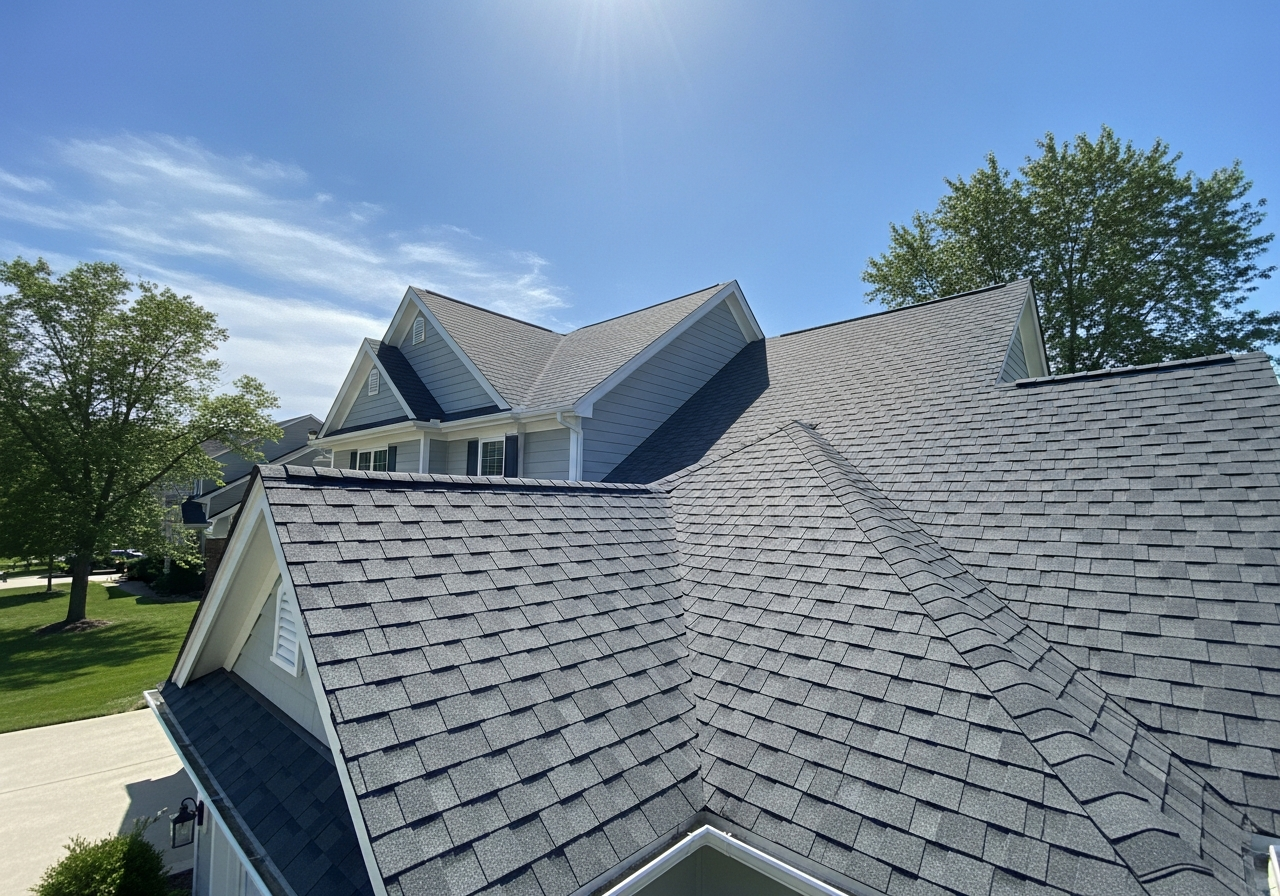

A roof warning sign is a visible symptom, inside or outside the house, that suggests the roof system is losing its ability to shed water.
Catching roof problems early can save you thousands in water damage repairs. Here are the 10 most important warning signs to watch for on your St. Louis home.
1. Your Roof Is Over 20 Years Old
Most standard asphalt shingle roofs have a functional lifespan of 20–30 years in the St. Louis climate. If your roof is in that range, it may look fine from the ground but be approaching the end of its effective waterproofing life. Annual professional inspections become essential once you pass the 15-year mark.
2. Shingles Are Curling or Buckling
Curling at the edges (cupping) or buckling in the middle of shingles indicates the material is drying out and losing its weathering ability. This is often accompanied by granule loss and is a reliable sign that the shingles are nearing or past their useful life.
3. Granules Are Accumulating in Your Gutters
Asphalt shingles are coated with mineral granules that protect the asphalt from UV degradation. As shingles age, these granules loosen and wash into your gutters. Finding significant granule accumulation — especially after a heavy rain — is a clear sign your shingles are aging out.
4. You Can See Daylight Through Your Attic
A simple attic inspection can reveal a lot. Turn off any artificial lighting in your attic on a bright day and look up. Any pinpoints of light coming through the roof boards indicate gaps, holes, or failed flashing that water can penetrate. If light gets in, water gets in.
5. Water Stains on Ceilings or Walls
Interior water staining is never just a cosmetic issue — it means water has already breached your roof system and is penetrating your living space. By the time staining appears on interior surfaces, the damage in the attic, insulation, and structural members may already be significant.
6. Flashing Is Cracked, Lifted, or Corroded
Flashing is the metal work around your chimney, skylights, vent pipes, and roof-to-wall junctions. It's a critical component that diverts water away from seams and penetrations. Cracked caulk, corroded metal, or lifted flashing sections are among the most common sources of roof leaks — and they're often repairable without a full replacement if caught early.
7. Sagging Roof Sections
A roof that sags or dips — even subtly — in any section is a serious structural warning. This can indicate rotted decking, failed supports, or long-term moisture intrusion that has compromised the structural integrity of the roof system. This is never a watch-and-wait situation — call a professional immediately.
8. Moss or Algae Growth
Black streaking (algae) or green moss growth on your shingles indicates moisture is being retained on the roof surface. While algae streaking is primarily cosmetic and can be treated, moss physically lifts shingles as its root system expands — accelerating water infiltration. CertainTeed's StreakFighter® technology prevents this on new installations.
9. Storm Damage You Can't See from the Ground
Hail damage to asphalt shingles often isn't visible from the ground — but it's there. Hail impacts bruise the shingle, fracturing the granule bond and the asphalt mat underneath. These invisible impact points rapidly accelerate shingle aging and void most manufacturer warranties. After any significant hailstorm in the St. Louis area, get a professional roof inspection — it's free and it protects your insurance rights.
10. Your Neighbors Are Getting New Roofs
This sounds simple, but it's actually a useful signal. If several homes in your neighborhood are getting new roofs — especially after a storm — it's likely because an insurance adjuster approved the claims. Most subdivisions were built in phases with roofing materials of similar age and quality. If your neighbors' roofs qualified for replacement, yours very likely did too. Contact us for a free inspection and we'll let you know honestly where you stand.
Schedule Your Free Roof Inspection
STLBRC provides completely free, no-obligation roof inspections throughout the St. Louis metro area. We'll climb up, examine every section of your roof, check your attic from inside, photograph any issues, and give you an honest assessment of your roof's condition and remaining life. There's no pressure and no cost. Call (636) 999-7663 or contact us online to schedule.
Which signs need a call this week?
Active leaks, sagging areas and daylight in the attic need prompt attention. These point to water already getting in or to possible structural problems. Stay off the roof and keep people away from any sagging ceiling. Move belongings away from drips and call a contractor for an inspection.
Which signs can wait for a planned inspection?
Light granule loss, a few streaks and an older age can usually be checked on a normal schedule. They show wear, not an emergency. Write down what you noticed and when. A dated note helps the inspector tell aging apart from storm damage.
Can one sign alone justify replacement?
Rarely. A single curled shingle or one stained ceiling spot may be repairable. Replacement makes sense when several signs appear together across the roof. Ask the inspector to show photos of each issue and explain why repair would or would not hold.
Can a home inspection report substitute for a roofer?
It is a useful start, but a roofer should confirm repair options.
Is an inspection worth it?
Yes, an inspection gives you photos and facts before you decide.
- Ask for photos of every slope
- Keep the report with your records