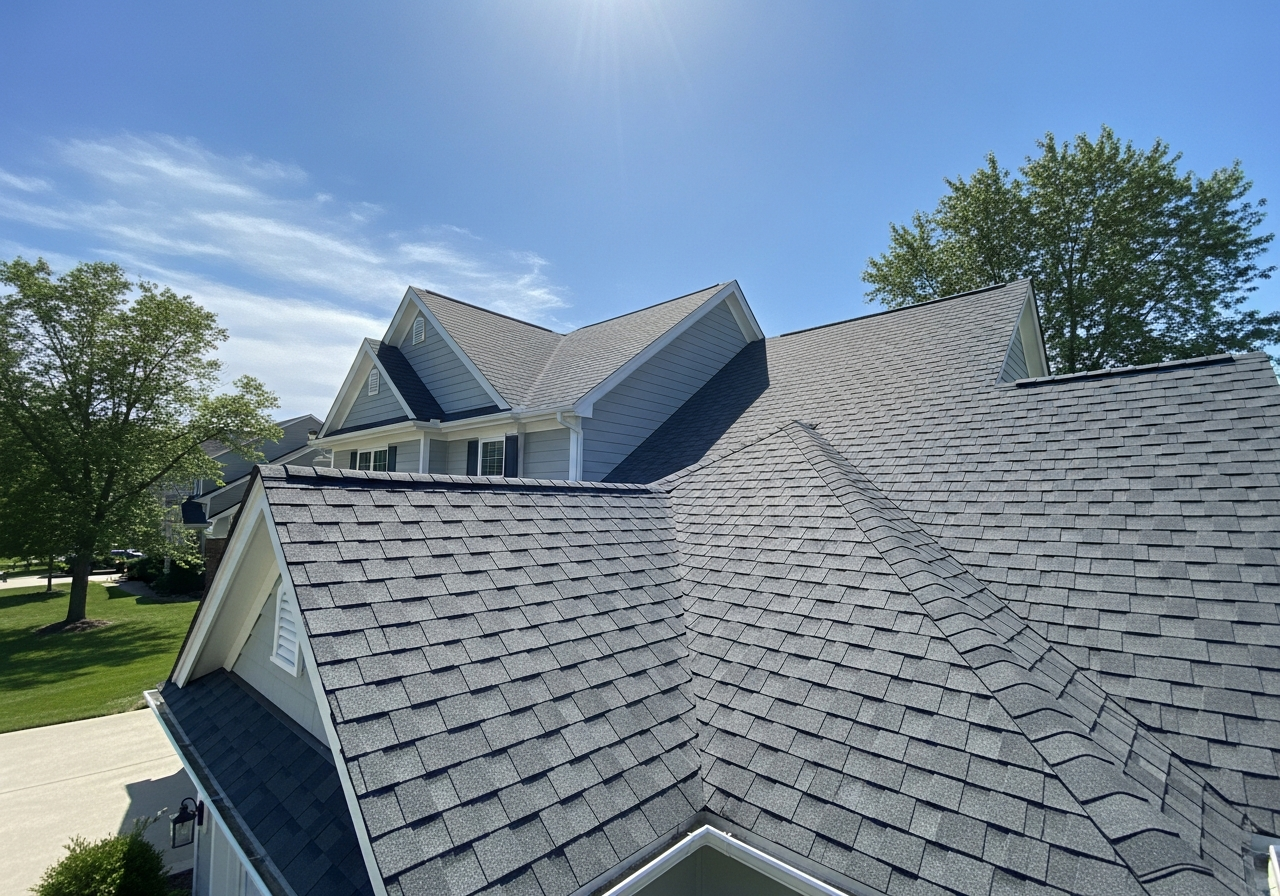

Roof maintenance is the routine, mostly ground-level checking and cleaning that keeps small problems such as clogged gutters or cracked sealant from turning into leaks.
A roof is one of the biggest investments in your home, yet most people ignore it until it leaks. A little seasonal attention can add years of life — here's the maintenance routine we recommend for Missouri homes.
Your roof asks for very little. But the small things it does need — clear gutters, sound flashing, an occasional inspection — make the difference between getting 20 years out of it and getting 30. In the St. Louis area, where roofs face brutal summers, ice-forming winters, and violent spring storms, a bit of routine care pays for itself many times over. Here's the practical maintenance routine we share with homeowners across Chesterfield, Fenton, Valley Park, and Washington.
Keep Your Gutters Clear — This One Matters Most
If you do only one thing for your roof, keep the gutters clean. Clogged gutters let water back up under the shingles along the eaves, rotting the decking and fascia and creating the perfect conditions for winter ice dams. In our area, plan on cleaning them at least twice a year — late spring after the seed pods and helicopters drop, and late fall once the leaves are down. Homes with mature oaks and maples, common throughout older St. Louis neighborhoods and towns like Kirkwood and Webster Groves, may need a third pass.
Trim Back Overhanging Branches
Limbs that hang over the roof do damage in three ways: they scrape granules off the shingles when the wind blows, they drop debris that clogs valleys and gutters, and they give squirrels and raccoons a highway onto your roof. They're also the number-one cause of catastrophic roof damage during our spring storms. Keep branches trimmed back several feet from the roofline. It's cheap insurance against a very expensive repair.
Inspect After Every Major Storm
Missouri's severe weather season runs hard from March through June, and a single hailstorm or straight-line wind event can do damage you won't notice from inside. After any significant storm, do a ground-level check:
- Walk the perimeter and look for shingles or granules in the yard and downspout splash areas
- Scan the roof with binoculars for missing, lifted, or dented shingles
- Check metal vents, gutters, and downspouts for hail dents
- Look at the ground for pieces of shingle or exposed black underlayment on the roof
- Inside, check ceilings and attic for fresh water stains
Check Your Attic — The Early-Warning System
The attic tells you what's happening to your roof before it becomes a ceiling stain. A few times a year, take a flashlight up and look for daylight coming through the roof boards, dark water stains on the decking or rafters, damp or matted insulation, and any musty smell. Catching a small leak in the attic can save you from a collapsed ceiling and a mold problem later. While you're up there, make sure attic vents and soffit vents aren't blocked by insulation — proper airflow is essential to a healthy roof.
Watch the Flashing and Sealant
Most roof leaks don't start in the open shingle field — they start at the transitions: around chimneys, skylights, plumbing vents, and in the valleys where two roof planes meet. The metal flashing and sealant at these points weather faster than the shingles around them. During an inspection we check that flashing is tight and rust-free and that any exposed sealant hasn't cracked or pulled away. These are small, inexpensive fixes when caught early and major repairs when ignored.
Prevent Winter Ice Dams
Ice dams form when heat escaping into the attic melts snow on the upper roof, which then refreezes at the cold eaves and traps water behind it. That trapped water works its way under the shingles and into the house. The two best defenses are good attic insulation (to keep heat out of the attic) and good ventilation (to keep the roof deck cold and even in temperature). If you saw icicles and ice buildup along your eaves last winter, that's a warning sign worth addressing before the next cold snap.
Know When to Call a Professional
Some maintenance is a homeowner job; some isn't. Walking a wet or steep roof is genuinely dangerous, and it's easy to cause more damage than you fix. For anything beyond ground-level observation and gutter cleaning — sealing flashing, replacing shingles, or diagnosing a leak — it's worth having a professional handle it safely. A yearly professional inspection is inexpensive and often catches problems while they're still cheap to fix. If you'd like a thorough look at your roof anywhere in the St. Louis area, call STLBRC at (636) 999-7663.
What can a homeowner safely check without climbing?
Most useful checks happen from the ground, a window or the attic. Use binoculars to scan for missing shingles, lifted edges and loose flashing. Walk the yard after storms and look for shingle pieces or granules near downspouts. In the attic, use a flashlight to look for damp insulation or stained wood. Leave anything on the roof surface itself to a professional with fall protection.
How often should a professional look at the roof?
Once a year is a reasonable rhythm, plus after any large hail or wind event. An older roof deserves closer attention because sealant and flashing age faster than the field shingles. Keep the inspection photos in one folder. They give you a dated record if you ever need to show when damage first appeared.