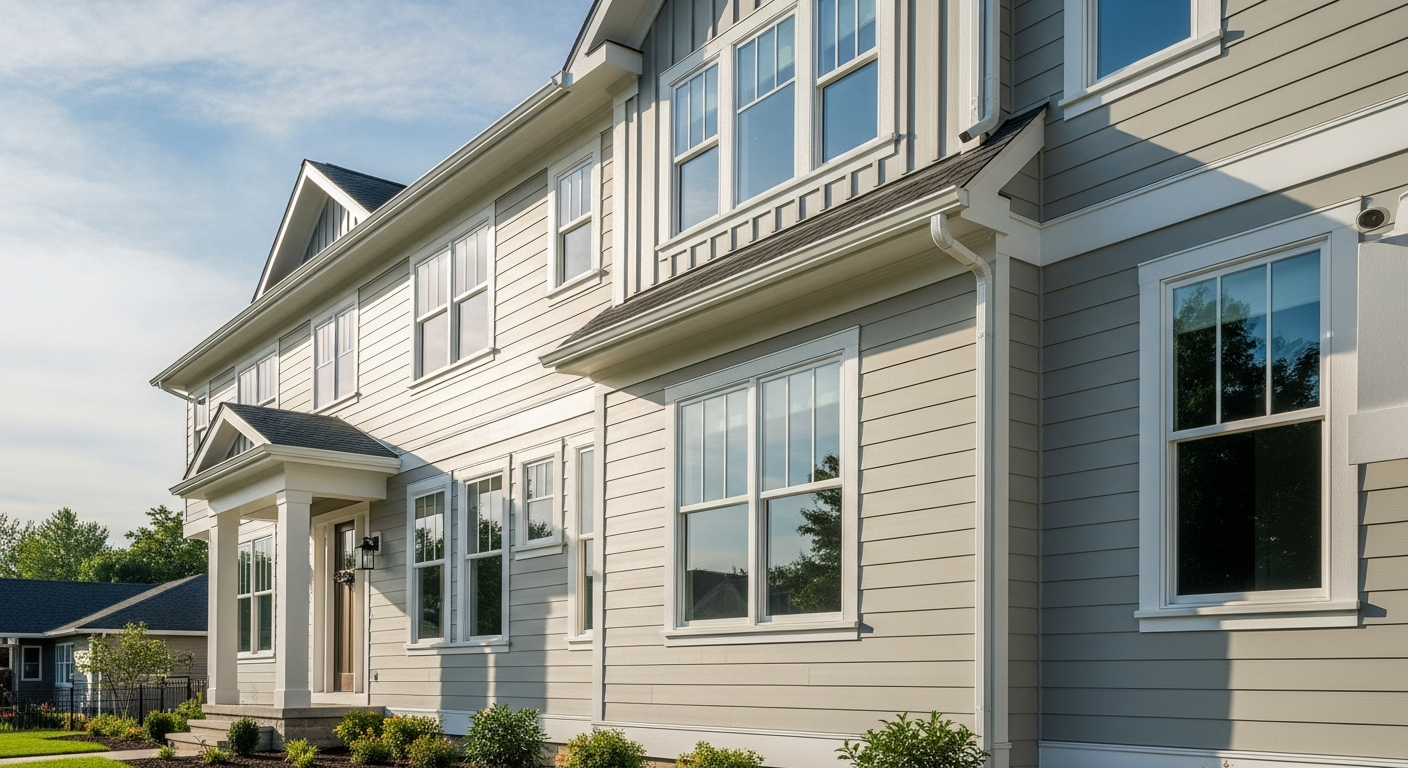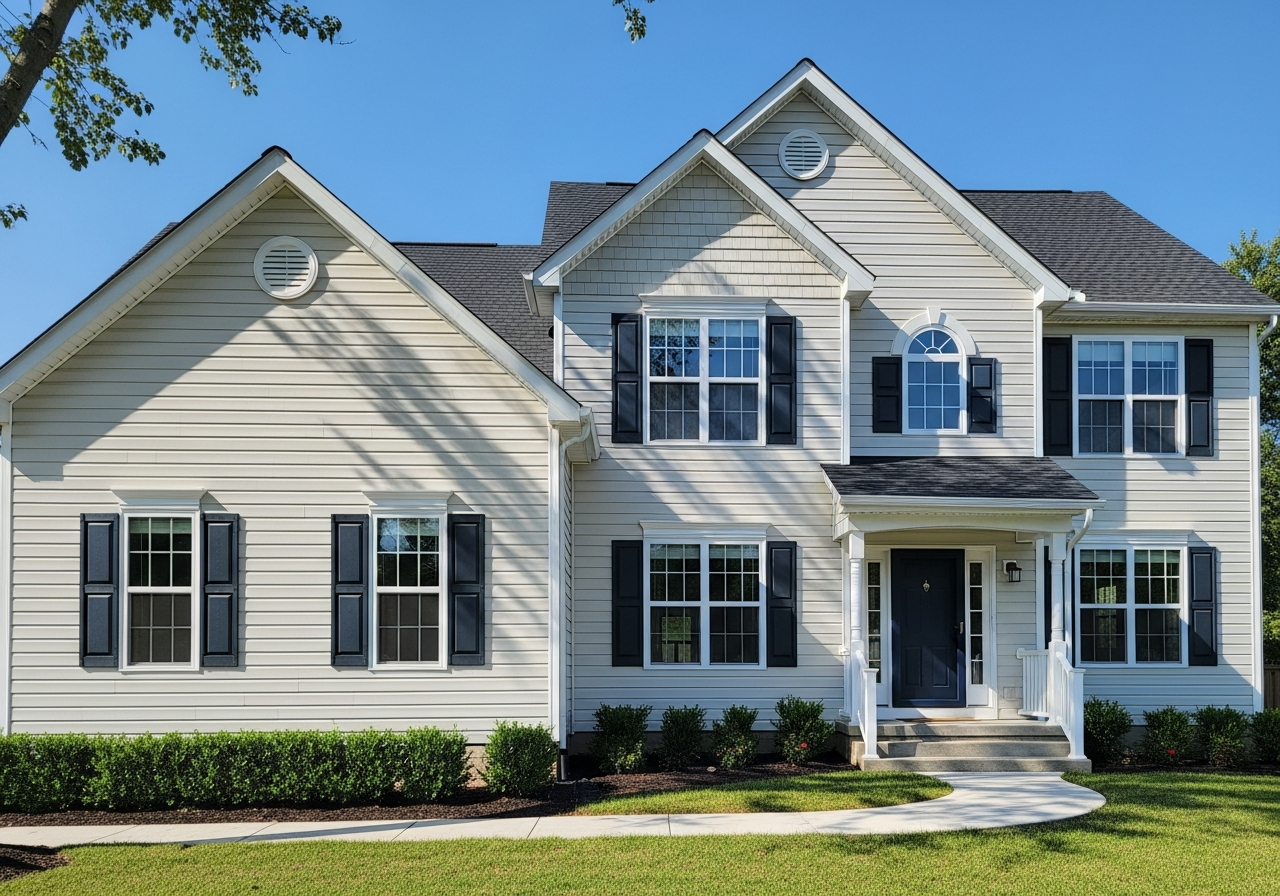
James Hardie makes fiber cement siding from cement, sand and cellulose fiber, while LP SmartSide is engineered wood siding made from treated wood strands and resin.
Two of the most popular premium sidings on the market go head to head. Here's how James Hardie fiber cement and LP SmartSide engineered wood compare for St. Louis homes — and how to choose.
When St. Louis homeowners move past basic vinyl and start looking at premium siding, two names come up again and again: James Hardie fiber cement and LP SmartSide engineered wood. Both are excellent, both dramatically outperform builder-grade vinyl, and both will transform a home's curb appeal and durability. But they're built from different materials and behave differently — and the right pick depends on your priorities. Here's an installer's honest comparison for our Missouri climate.
James Hardie: Fiber Cement Toughness
James Hardie (often just called 'Hardie' or HardiePlank) is fiber cement siding — a blend of cement, sand, and cellulose fibers. It's the heavyweight champion of durability. Fiber cement doesn't burn, doesn't rot, doesn't attract termites, and stands up to hail and wind exceptionally well. Hardie also engineers its products for specific climates through its HardieZone system, and the color-baked ColorPlus finish holds up beautifully against our intense Missouri sun.
- Extremely durable: fire-resistant, rot-proof, insect-proof, impact-resistant
- Excellent longevity, often with 30-year and 15-year warranties on board and finish
- Premium appearance that holds paint and color exceptionally well
- Heavier and requires experienced, specialized installation
LP SmartSide: Engineered Wood Warmth
LP SmartSide is engineered wood — wood strands bonded with resins and treated with a zinc borate process (LP's SmartGuard treatment) that resists rot, fungal decay, and termites. It delivers the authentic look and workability of real wood while solving wood's traditional weaknesses. It's noticeably lighter than fiber cement, which makes installation faster and often less expensive, and it takes paint well.
- Authentic wood look with deep, realistic grain texture
- Lighter weight and easier, often faster installation
- Treated to resist rot, decay, and insects; strong impact resistance
- Backed by a long warranty, commonly 50 years prorated on the substrate
How They Compare on the Things That Matter
Here's where the practical differences land for a Missouri home:
- Durability: Both are excellent. Fiber cement is non-combustible; engineered wood is impact-tough and lighter.
- Weather: Both handle our heat, cold, and storms well when installed correctly. Hardie's fire resistance is a distinct edge; SmartSide's flexibility resists cracking.
- Installation: SmartSide is lighter and faster to install, which can lower labor cost. Hardie requires specialized handling and cutting.
- Cost: SmartSide is often somewhat more budget-friendly installed; Hardie tends to sit at the top of the premium range.
- Maintenance: Both need periodic repainting eventually, though factory-finished Hardie ColorPlus stretches that interval.
Which Should You Choose?
Choose James Hardie if maximum durability and fire resistance are your top priorities, you want the longest color life against harsh sun, and you're comfortable investing at the premium end. Choose LP SmartSide if you love the warmth and texture of real wood, want a lighter product that can install faster and often cost a bit less, and value a strong, straightforward warranty. Honestly, both are outstanding choices that will serve a St. Louis home for decades — you can't make a bad decision between them. The bigger factor is installation quality: premium siding installed poorly will fail at the seams and flashing. We install both and will help you weigh them for your specific home and budget. Call STLBRC at (636) 999-7663.
Which is easier to repair after damage?
Both can be repaired board by board when the installer keeps spare pieces. Matching paint color is the bigger challenge. Keep the color name and any leftover boards after installation. That makes future storm repairs faster and easier to match.
What installation details matter for each?
Each brand publishes its own installation instructions. Clearance from the ground and roof lines, cut-edge sealing and flashing above windows are common points. Skipping them can affect performance and warranty coverage. Ask each contractor whether they follow the manufacturer's current instructions and how they handle cut ends.
Is weight a factor?
Fiber cement is heavier and needs care to cut, which can affect labor time. Engineered wood is lighter and handles more like lumber. Neither difference matters to the homeowner once installed, but it can shape how quotes compare. Ask why one bid costs more before assuming it is padded.
How should you decide between them?
Start with your priorities and the condition of your walls. Ask each installer to show finished homes of the same product nearby. Seeing a few years of real aging in our climate is more useful than any brochure claim.
Do both need paint over time?
Yes, both are painted products that need eventual repainting. Factory finishes may last longer than site paint. Ask about finish warranties.
Can you see both before choosing?
Yes, ask installers for sample boards of each and addresses of finished homes. Compare grain texture, trim profiles and paint finish side by side in daylight. Ask which one they install most often.
- Ask how each product is stored on site before install
- Ask how cut ends are primed or sealed
- Compare trim board options for each brand