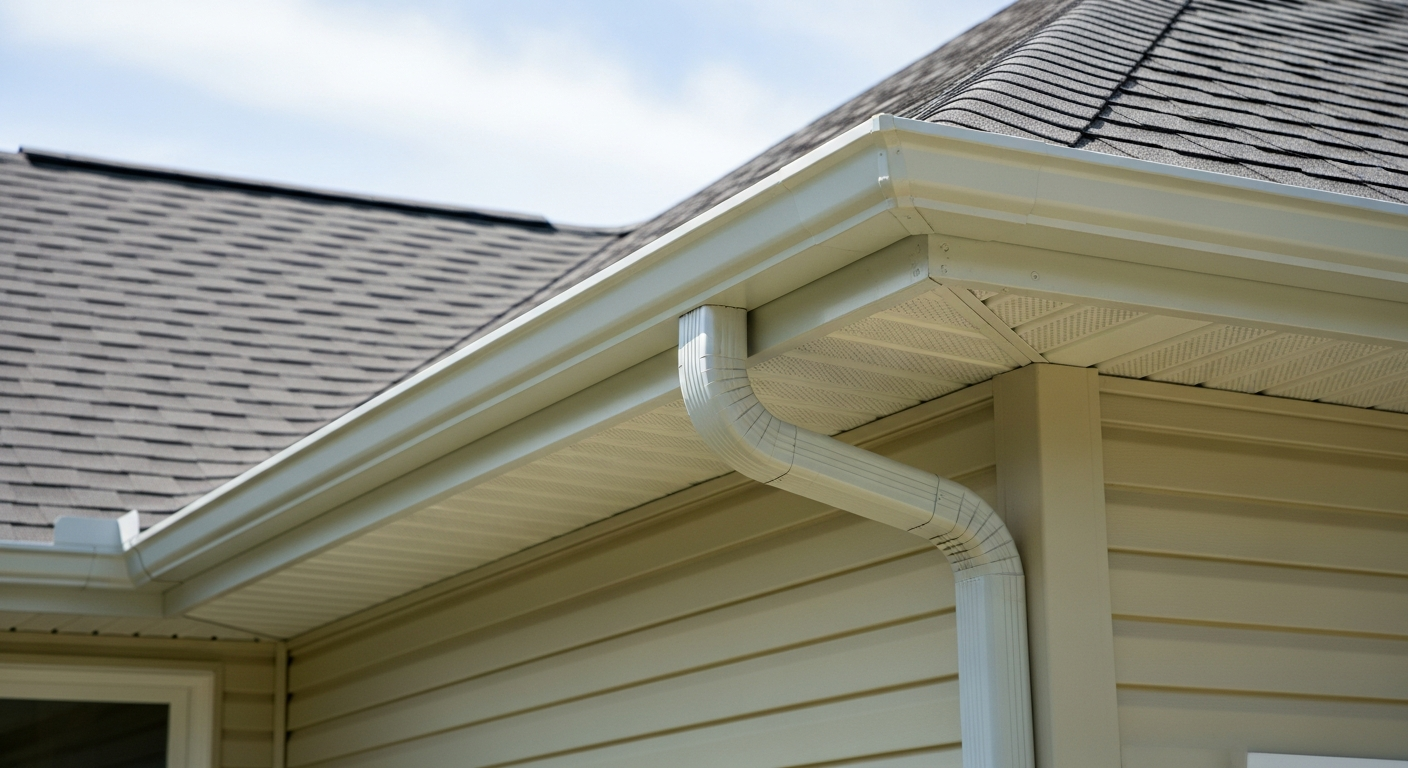

A gutter system is the set of troughs, hangers, downspouts and outlets that collects roof runoff and carries it away from your walls and foundation.
Gutters are the unglamorous hero of your home's exterior — when they work, water goes where it should, protecting your roof, siding, and foundation. Here's what St. Louis homeowners should know.
Gutters rarely get much thought — until the day water is pouring over the edge, pooling against the foundation, or backing up under the roof. That humble channel of aluminum does one of the most important jobs on your home: moving thousands of gallons of rainwater safely away from your roof, siding, and foundation. In a region that sees heavy spring downpours like ours, a properly designed gutter system is essential protection. Here's what matters when you install or replace gutters in St. Louis.
Why Good Gutters Matter More Than People Think
When gutters fail or are undersized, water goes where you don't want it, and the damage adds up fast:
- Water backs up under the roof edge, rotting fascia and decking
- Overflow runs down siding, causing staining, rot, and mold
- Water pools at the foundation, leading to cracks, settling, and wet basements — a common problem in older St. Louis homes
- Splashback erodes landscaping and stains masonry
- In winter, poor drainage contributes to ice dams
Seamless Gutters: The Standard Worth Choosing
Traditional sectional gutters are cut from stock lengths and joined with seams — and every seam is a potential leak point that fails over time. Seamless gutters are custom-formed on-site from a continuous coil of aluminum to the exact length of each run, so the only joints are at corners and downspouts. Fewer seams means far fewer leaks and a cleaner appearance. For virtually every home, seamless is the better long-term choice, and it's what we install.
Getting the Size and Slope Right
A gutter system only works if it's engineered for the water it needs to carry. For homes with large or steep roofs, or in areas that get heavy downpours, oversized 6-inch gutters and larger downspouts move water far better than the standard 5-inch and prevent overflow during hard rains. Just as important is the slope — gutters need a subtle, correct pitch toward the downspouts so water actually drains rather than sitting and overflowing. And downspouts must discharge well away from the foundation. These details separate a system that protects your home from one that just looks like it does.
Are Gutter Guards Worth It?
Gutter guards cover the gutter to keep leaves and debris out while letting water in, reducing how often you need to clean them. In neighborhoods with mature trees — common across St. Louis, Kirkwood, and Webster Groves — they can be genuinely worthwhile, cutting down on clogs and the dangerous chore of climbing ladders. Quality varies widely, though: cheap guards can clog or deflect water in heavy rain. Good guards, properly installed and matched to your tree cover, meaningfully reduce maintenance. We're happy to give you an honest recommendation based on your specific home and surroundings.
Protect Your Home From the Top Down
Gutters are inexpensive compared to the roof, siding, and foundation repairs they prevent. If yours are leaking, sagging, overflowing, or pulling away from the house, replacing them is one of the most cost-effective protections you can invest in. We install seamless gutters, downspouts, and guards throughout the St. Louis metro, sized and pitched correctly for your roof. Call STLBRC at (636) 999-7663 for a free assessment.
Where should downspouts discharge?
They should send water well away from the foundation and onto ground that slopes away. Downspouts dumping right at the corner can soak the basement wall. Extensions or splash blocks are a simple first fix. Do not route water onto a neighbor's property or across a walkway where it will freeze.
How are gutters attached to the house?
Hidden hangers screwed into the fascia are the common modern method. Hangers need solid wood behind them. Rotted fascia should be replaced before new gutters go up. Ask the installer how far apart hangers will be spaced.
Should homeowners clean gutters from a ladder?
Only if you are comfortable with ladder safety and on a single-story home. Set the ladder on firm, level ground and never lean far to the side. Stay clear of power lines. For two-story homes or steep lots, hiring the job out is the safer choice.
Do trees near the house change the gutter plan?
Yes. Heavy leaf and seed drop clogs gutters faster and raises the value of guards. Pine needles and small seeds can get through some guard types. Ask which guard design fits the trees around your home. Larger downspouts can also help debris move through. Trimming branches back from the roof reduces debris and roof wear. Hire a tree service for large limbs near lines or the roof.
What should a gutter quote spell out?
Look for the gutter size, material, hanger type and spacing. Count of downspouts and their locations should be listed. Guards, fascia repair and haul-away should be clear lines. Ask what the workmanship warranty covers.
- Confirm gutter color against trim samples
- Ask whether downspouts tie into underground drains
- Ask how guards are cleaned if debris builds up