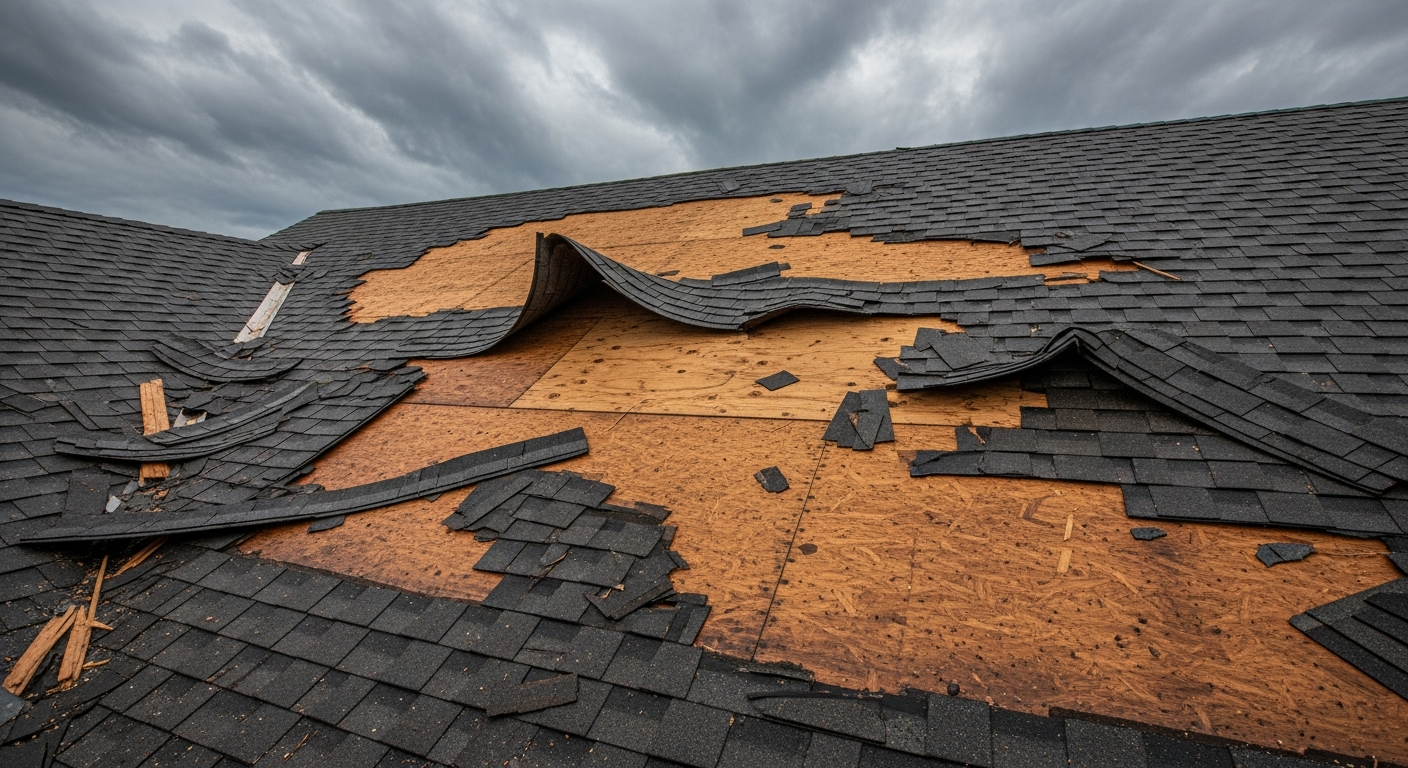

Emergency storm repair is temporary work, such as tarping or boarding up, that stops further damage until permanent repairs can be planned and approved.
When a storm damages your home, the first hours matter. Here's exactly what to do — and in what order — to keep your family safe, protect your home, and set up your insurance claim for success.
Missouri's storm season can turn violent fast. Straight-line winds, hail, and the occasional tornado tear through the St. Louis metro every spring, and a single storm can leave a tree through the roof, siding stripped off, or water pouring into the house. In those first chaotic hours, what you do — and the order you do it in — makes a real difference in your safety and your insurance outcome. Here's the step-by-step guide we give homeowners.
Step 1: Make Sure Everyone Is Safe
Before anything else, focus on people. Get everyone out of any area with structural damage, a compromised ceiling, or standing water. If a tree or debris has hit the house, assume the structure may be unstable. Stay away from any downed power lines and anything they're touching, and treat every downed line as live. If you smell gas, hear hissing, or suspect an electrical hazard, leave the home and call your utility and 911 from a safe distance. No possession is worth an injury.
Step 2: Stop the Damage From Spreading — Safely
Once it's safe, your goal is to prevent further damage — most insurance policies actually require you to take reasonable steps to do so. That usually means getting water intrusion under control: moving furniture and valuables away from leaks, putting down buckets and towels, and clearing water where you safely can. What it does not mean is climbing onto a wet, damaged roof yourself. Emergency tarping and board-up should be done by professionals with the right equipment. This is exactly the kind of emergency response we provide — a proper tarp installed correctly buys you time and protects your claim.
Step 3: Document Everything Before Cleanup
Before you clean up or make permanent repairs, document the damage thoroughly — this is the foundation of a smooth insurance claim:
- Take wide photos and close-ups of all damage, inside and out
- Photograph damaged possessions and any water-damaged belongings
- Note the date and time of the storm
- Keep receipts for any emergency supplies (tarps, plywood, a hotel stay if the home is unlivable)
- Don't throw damaged items away until they've been documented and, ideally, seen by the adjuster
Step 4: Call Your Insurance Company
Report the claim to your homeowner's insurance promptly. They'll assign a claim number and schedule an adjuster to inspect the damage. Be factual and thorough about what happened. It's often wise to have a trusted contractor inspect the damage before or during the adjuster's visit, so nothing legitimate — like hail bruising on the roof or wind-lifted shingles you can't see from the ground — gets overlooked. We regularly meet adjusters on-site to make sure the full scope of damage is documented.
Step 5: Choose a Reputable Local Contractor
After a big storm, out-of-town 'storm chasers' flood the area, knocking on doors and pushing for quick signatures. Be cautious. Many collect deposits and disappear, do shoddy work, or vanish when a warranty issue arises because they're already three states away. Choose an established, licensed, and insured local contractor who will still be here next year to stand behind the work. Ask for proof of insurance and local references.
We're Here When the Storm Hits
STLBRC is a local, licensed, and insured contractor serving the entire St. Louis metro, including Pacific, Eureka, Fenton, House Springs, and the surrounding communities. We provide emergency tarping and board-up, full storm-damage assessments, and honest help navigating your insurance claim — and we're here long after the storm to back our work. If your home has been hit, call us at (636) 999-7663.
What should you never do yourself after a storm?
Do not climb on a wet or damaged roof. Stay away from downed power lines and anything touching them. Do not enter rooms with sagging ceilings or standing water near outlets. Call the utility for lines and gas smells, and let trained crews handle tarping.
Will insurance pay for emergency tarping?
Many policies expect you to take reasonable steps to prevent more damage. Whether and how tarping is reimbursed depends on your policy. Keep receipts and photos of the temporary work. Ask your insurer about reimbursement when you report the claim.
How long can a tarp stay on?
A tarp is a short-term fix. Wind and sun break tarps down, and loose edges can let water in. Plan the permanent repair as soon as the claim allows. Ask the crew how they fasten tarps to limit added roof damage.
Should you keep damaged materials?
Keep a few damaged pieces until the adjuster visits, when it is safe. Photograph everything before disposal.
What should be in your emergency kit?
Keep a flashlight, charged phone battery, your insurance policy number and a contractor contact list ready. Store a few heavy plastic sheets and tape for interior use only.
- Write your utility emergency numbers on the kit
- Keep a printed copy of the policy declarations page
- Store the kit somewhere you can reach in the dark