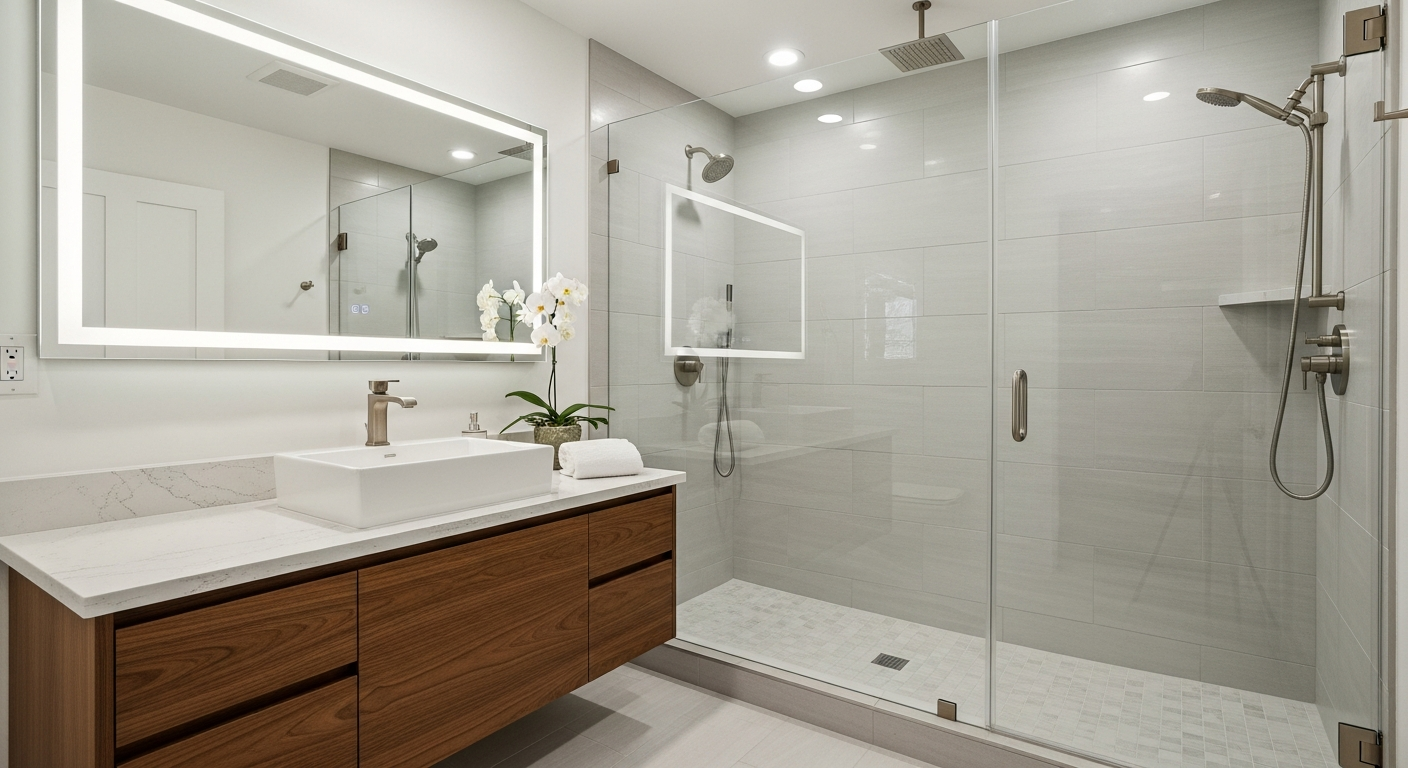
A custom tile shower is a site-built shower with a sloped pan, waterproof membrane and tile finish, designed to fit the space instead of using a one-piece insert.
A custom tile shower can be the showpiece of your bathroom — or a hidden source of leaks and mold if it's built wrong. Here's what goes into doing it right, from design to the waterproofing you never see.
A custom tile shower is one of the most requested features in bathroom remodeling, and for good reason — it's beautiful, fully customizable, and a genuine upgrade over a prefab fiberglass unit. But a tile shower is only as good as what's behind the tile. Get the waterproofing right and it lasts for decades; get it wrong and water quietly destroys the wall framing and the ceiling below. Here's what St. Louis homeowners should understand before building one.
Why Tile Showers Fail (and How to Avoid It)
Here's the truth the tile itself won't tell you: tile and grout are not waterproof. Water passes through grout lines over time. That's why a proper tile shower relies on a complete waterproofing system behind the tile to catch and drain that moisture. When a shower leaks, it's almost never the tile — it's a failed or missing waterproofing layer underneath. The most common causes of failure are skipped waterproofing, an improperly built shower pan, and inadequate slope to the drain. A shower built by someone who cuts these corners will look fine on day one and fail within a few years.
The Waterproofing That Matters
A correctly built custom shower includes a continuous, integrated waterproofing system — a properly sloped and waterproofed shower pan, waterproofed walls, and sealed transitions and penetrations — so that any water reaching behind the tile is captured and directed to the drain. Modern systems make this reliable when installed correctly and to manufacturer specification. This is the part you'll never see and should never skimp on; it's the difference between a shower that lasts and one that rots your bathroom from the inside.
Design Options for a Custom Shower
Once the waterproofing is handled, the design possibilities are wide open:
- Large-format porcelain or natural stone for a clean, modern, low-grout look
- Built-in niches and shelves for storage without clutter
- A built-in bench or seat for comfort and accessibility
- Curbless (zero-threshold) entries for a seamless, accessible design
- Frameless glass enclosures to show off the tilework
- Decorative accent bands, mosaic floors, and mixed textures
- Multiple or rainfall showerheads and body sprays
What Custom Tile Showers Cost
Custom tile showers cost more than a prefab insert because they're built by hand, piece by piece, with a proper waterproofing system underneath. The price depends on the size, the tile you choose (basic porcelain versus premium natural stone), and the complexity of the design — niches, benches, curbless entries, and intricate patterns all add labor. What you're paying for is craftsmanship and longevity: a well-built custom shower is a decades-long feature, not a builder-grade box you'll want to replace.
Craftsmanship You Can Rely On
A tile shower is one of the clearest tests of a remodeler's skill and integrity, because the most important work is the part you can't inspect once it's tiled. We build custom tile showers the right way — proper waterproofing, correct slope, and careful tilework — so yours performs beautifully for the long haul. For a free consultation on a custom shower or full bathroom remodel in the St. Louis area, call STLBRC at (636) 999-7663.
Is tile itself waterproof?
No. Tile and grout let some moisture through. The membrane beneath the tile is what keeps water out of the walls and floor. That is why the hidden layers matter more than the tile you pick.
How should a shower pan be tested?
Many installers flood-test the pan before tile goes on. The drain is plugged and water sits for a set time to check for leaks. Ask whether your installer does this and how long they test. Finding a leak now is far cheaper than after tile.
What maintenance does a tile shower need?
Squeegee walls after use and keep the fan running. Clean with products safe for your tile and grout. Watch for cracked grout or failed caulk at corners and replace it promptly.
What questions should you ask a tile installer?
A short set of questions reveals a lot about how a shower will be built. Ask which waterproofing system they use and whether it is one system from pan to walls. Ask how niches, benches and valve openings are sealed, since these are common leak points. Ask about the slope toward the drain and how they check it. Ask how movement joints are handled at corners and changes of plane. Ask whether they flood test and for how long. Ask for photos of showers they built before tile went on. Confident installers are glad to show their hidden work.
How long should a new shower sit before use?
Follow the installer's guidance for grout and sealant cure time before running water.
- Ask which grout type suits your tile and how often it needs sealing
- Confirm who installs the glass and when it is measured
- Keep leftover tile and grout labeled for future repairs