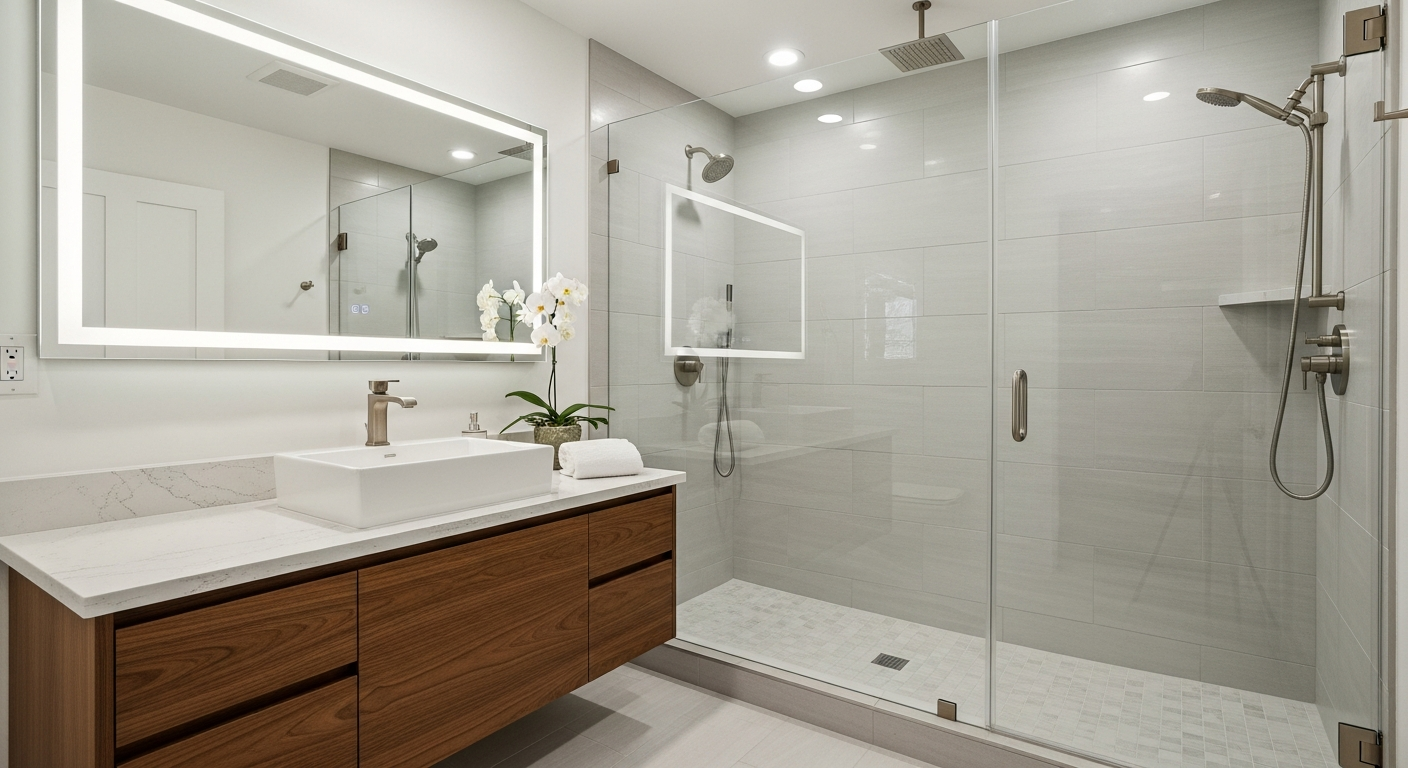

A bathroom remodel is the replacement or reconfiguration of a bathroom's fixtures, surfaces, ventilation and plumbing, often including a new waterproofed shower or tub area.
A well-designed bathroom is a daily luxury and a strong resale investment. Here's how St. Louis homeowners should approach bathroom remodeling — cost, tile, layout, and the details that matter.
Bathrooms are small rooms that punch above their weight — both in daily quality of life and in resale value. They're also, per square foot, some of the most involved rooms to remodel, packing plumbing, waterproofing, tile, ventilation, and finishes into a tight footprint where every detail shows. Whether you're refreshing a hall bath or building a spa-like master retreat, here's how St. Louis homeowners should think it through.
What Drives Bathroom Remodel Cost
As with kitchens, scope determines cost. The biggest factors are:
- The size of the bathroom and whether the layout stays or changes
- Whether you're moving plumbing fixtures (a major cost driver)
- Tile — the amount, type, and complexity of the pattern
- The shower and tub: a basic tub-shower versus a custom tile shower or freestanding tub
- Vanity, countertop, fixtures, and lighting quality
- Any structural or subfloor repairs uncovered along the way, common in older homes
Project Tiers, From Refresh to Luxury
It helps to know which kind of project you're planning:
- Refresh: new vanity, fixtures, mirror, paint, and lighting while keeping the layout — the most affordable upgrade
- Mid-range remodel: new tile, a rebuilt shower or tub, vanity, flooring, and fixtures — the most common bathroom project
- Luxury master bath: a large custom tile shower, freestanding tub, double vanity, heated floors, and premium finishes
Tile: Where Bathrooms Are Made or Broken
Tile is the heart of a bathroom's look — and its performance. Beyond appearance, what matters most is what's behind the tile: proper waterproofing. A beautiful tile shower installed over inadequate waterproofing will fail and leak within a few years, causing hidden damage to the framing and rooms below. Popular choices in our market include large-format porcelain for a clean, low-grout look, classic subway tile, and natural stone accents. We'll talk more about custom tile showers specifically in a dedicated guide, but the golden rule is: never let anyone cut corners on the waterproofing system beneath the tile.
Smart Design Choices for St. Louis Homes
Certain design decisions consistently deliver comfort and lasting value: good ventilation (an oversized, quiet exhaust fan) to fight our humid summers and prevent mold, ample storage in the vanity, quality moisture-resistant flooring, and layered lighting that includes bright task lighting at the mirror. Curbless or low-threshold showers are increasingly popular both for their clean look and for aging-in-place accessibility — a feature many homeowners are building in proactively.
Build It to Last
Because bathrooms deal with constant water and humidity, the quality of the behind-the-scenes work matters more here than almost anywhere else in the home. Proper waterproofing, correct slope, quality plumbing, and good ventilation are what separate a bathroom that looks great for fifteen years from one that develops problems in three. We build bathrooms right, from the waterproofing out. For a free bathroom remodeling consultation in the St. Louis area, call STLBRC at (636) 999-7663.
Why does the exhaust fan matter so much?
A bathroom without proper ventilation can grow mold and peel paint. The fan should vent outdoors, not into the attic. It should be sized for the room and quiet enough that people use it. A timer switch helps it run long enough after showers.
Should you keep the tub or go shower only?
Think about who uses the home now and later. A walk-in shower is easier to step into for many people. Families with small children often want at least one tub in the house. If you remove the only tub, consider how that may affect future buyers.
What hidden problems show up during demo?
Rotted subfloor near the toilet or tub is common. Old leaks may have damaged framing or joists. A good contract explains how hidden repairs are priced. Ask for photos before extra work begins.
How do you plan for aging in place?
Add blocking in the walls for future grab bars during the remodel. It costs little now and saves tearing tile later. Consider wider doorways, lever handles and a curbless or low-curb shower where layout allows.
How long does a bathroom remodel take?
Timing depends on scope, selections and inspections more than on demolition. A cosmetic refresh moves faster than a full gut with new plumbing locations. Tile showers take time because waterproofing and mortar need curing between steps. Custom vanities, glass doors and some tile can have long lead times. Glass shower doors are usually measured after tile is finished, which adds a gap. Ask your contractor for a written sequence and which items must be ordered before demo. If it is your only bathroom, plan where you will shower during the work. Confirm the schedule before the old fixtures come out.
Who handles plumbing and electrical work?
Licensed plumbers and electricians should do that work. Ask whether permits are included and who schedules inspections.
- Ask whether rough-in plumbing and wiring inspections are scheduled before walls close
- Confirm the fan, lighting and outlet locations on the drawing
- Keep copies of permits and final inspection sign-offs with your home records