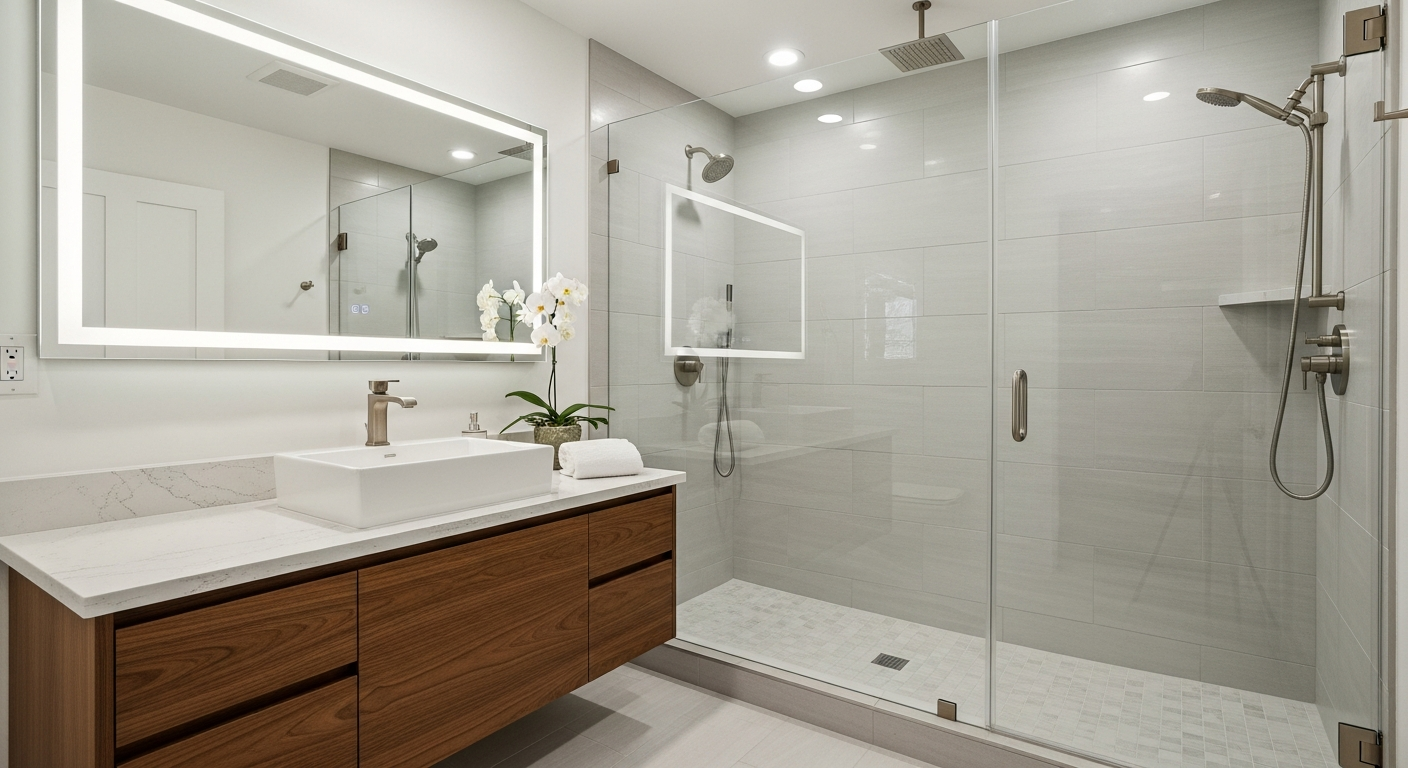

A countertop material is the slab surface on cabinets, and granite, quartz and onyx differ in whether they are natural stone or engineered and in how much care they need.
Countertops set the tone for a whole kitchen or bath — and the choice between granite, quartz, and onyx comes down to more than looks. Here's how they really compare for St. Louis homes.
Countertops are one of the first things people notice in a kitchen or bathroom, and they're a decision homeowners live with every day for years. Granite, quartz, and onyx are three of the most popular premium surfaces, and each has a distinct personality. Understanding how they differ in durability, maintenance, and look will help you choose the right one for how you actually use your space. Here's an honest comparison.
Granite: Natural Stone Character
Granite is natural stone, quarried and cut into slabs, which means every piece is genuinely one of a kind. It's prized for its natural depth and movement, and it's very hard and heat-resistant — you can set a hot pan on it. Because it's porous, granite needs to be sealed periodically to resist stains, but a well-sealed granite top handles the rigors of a busy kitchen beautifully.
- Pros: unique natural patterns, very hard, heat-resistant, timeless appeal
- Considerations: needs periodic sealing; each slab varies, so you choose your exact stone
- Best for: homeowners who want authentic natural stone and one-of-a-kind character
Quartz: Engineered Consistency
Quartz countertops are engineered — ground natural quartz bound with resins — which gives them two big advantages: they're non-porous (so they never need sealing and resist stains and bacteria) and they're highly consistent, so you get a uniform, predictable look. Quartz comes in a huge range of colors and patterns, including convincing marble looks. It's extremely durable, though it's less heat-tolerant than natural stone, so trivets are a must.
- Pros: non-porous, no sealing, very durable, consistent color, huge selection
- Considerations: less heat-resistant than granite; use trivets for hot pans
- Best for: busy kitchens and homeowners wanting low maintenance and a consistent look
Onyx: Dramatic Luxury
Onyx is the showstopper. A natural stone with striking translucent qualities and dramatic veining, onyx can even be backlit to glow — making it a breathtaking choice for a bar, an accent island, a powder room vanity, or a feature wall. It is, however, softer and more delicate than granite or quartz, so it's best reserved for lower-traffic showpiece applications rather than a hard-working main kitchen counter.
- Pros: stunning, translucent, dramatic — a true luxury statement, backlightable
- Considerations: softer and more prone to scratching and etching; needs care
- Best for: accent pieces, bar tops, powder rooms, and feature areas where drama matters most
How to Choose
Match the material to how you'll use the surface. For a hard-working family kitchen, quartz offers the easiest maintenance, or granite if you love natural stone and don't mind occasional sealing. For a dramatic accent — a bar, an island, a powder-room vanity — onyx delivers unmatched wow factor. Many homeowners mix materials: a durable quartz or granite on the main counters and a backlit onyx feature where it can shine. There's no single right answer, only the right fit for each surface's role.
See the Slabs in Person
Because natural stone varies so much slab to slab, we always encourage homeowners to see options in person before deciding — a photo never captures the movement and depth of real granite or onyx. We'll help you choose surfaces that fit your style, your usage, and your budget, and handle precise templating and installation. For a free countertop and remodeling consultation in the St. Louis area, call STLBRC at (636) 999-7663.
How do they handle heat and stains?
Use trivets under hot pans on all three to be safe. Quartz contains resins that can be damaged by high heat. Natural stone can stain if left unsealed, depending on the slab. Onyx is softer and more delicate, so it suits low-traffic areas better than busy prep zones.
Do seams matter?
Yes, especially on large islands and long runs. Slab size limits where seams go. Ask your fabricator to show seam locations on a drawing before cutting. Veined natural stone makes seam placement even more important.
What should you check before installation day?
Cabinets must be level and solid before stone goes on. Sink, faucet and cooktop models should be chosen first so cutouts are right. Ask whether the old top removal and plumbing reconnection are included.
Which countertop fits a busy family kitchen?
Quartz and many granites handle daily prep well. Onyx is better suited to bars or accent pieces with lighter use. Think about cooking habits, kids and how much care you want to give.
Should you pick the slab yourself?
With natural stone, yes when possible. Every granite and onyx slab is different, so a small sample may not show the veining you will get. Visit the yard and choose or approve the actual slab. Ask the fabricator to show where cuts and seams will fall on it. Quartz is more consistent, but checking a full slab still helps.