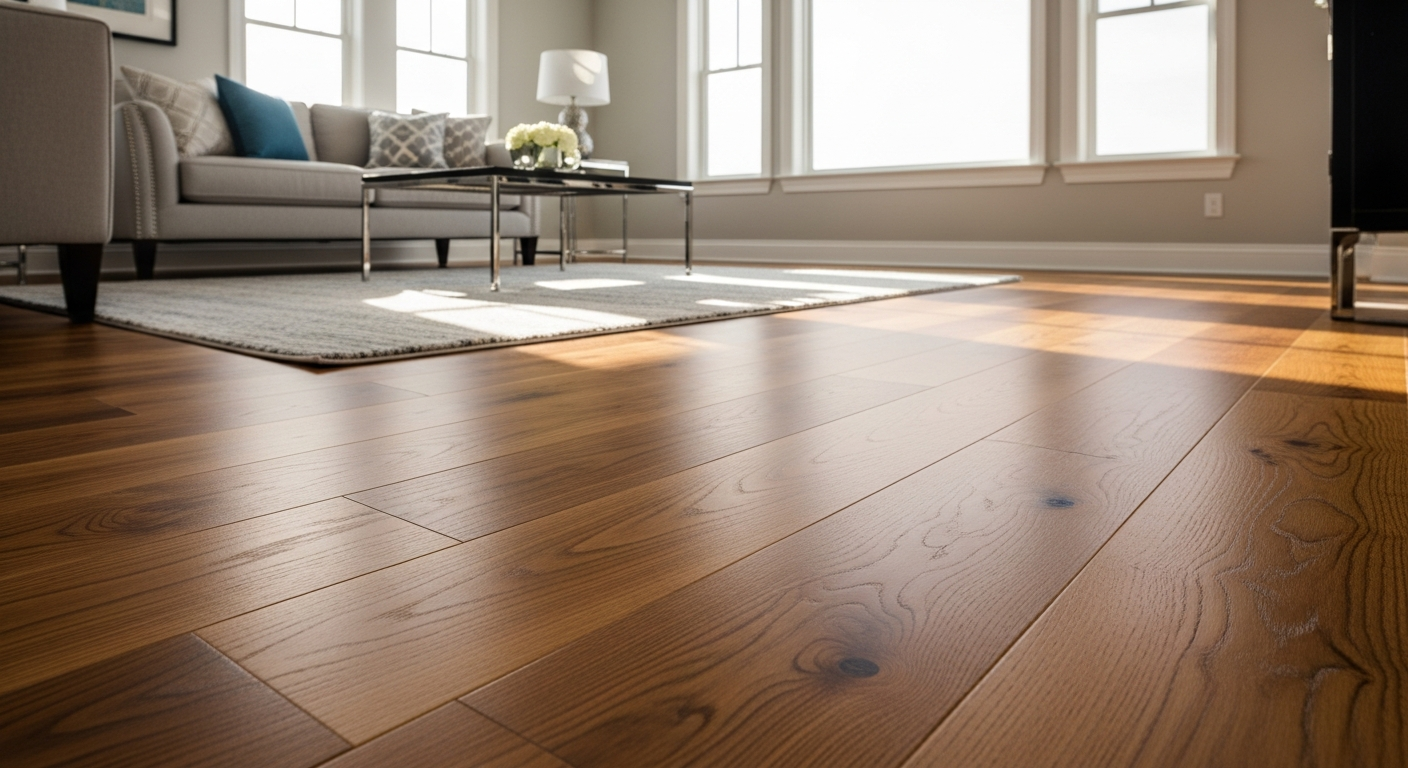

Luxury vinyl plank is a layered vinyl flooring product with a printed wood-look image and wear layer, usually installed as a floating click-together floor.
Waterproof, durable, and budget-friendly, luxury vinyl plank has taken over St. Louis homes for good reason. Here's an honest look at the pros, the cons, and what LVP really costs.
Luxury vinyl plank — LVP — has become the most-requested flooring we install, and it has genuinely earned its popularity. It combines water resistance, durability, and a realistic wood look at a price most budgets can handle. But it isn't perfect for every situation, and it's worth understanding both what it does brilliantly and where it falls short before you commit. Here's the honest picture for St. Louis homeowners.
What Makes LVP So Popular
LVP solves the biggest headaches of other floors all at once:
- Water resistance: many LVP products are fully waterproof, making them safe for kitchens, basements, and bathrooms where real wood can't go
- Durability: the tough wear layer resists scratches, dents, and fading — ideal for kids and pets
- Comfort: it's warmer and softer underfoot than tile, with a bit of give
- Realistic looks: modern LVP convincingly mimics hardwood and stone, with embossed texture
- Easy maintenance: it just needs sweeping and the occasional damp mop
- Value: lower material and installation cost than hardwood or tile
The Honest Downsides
No floor is perfect, and it's fair to know LVP's limits. It won't add resale value the way genuine hardwood does — buyers recognize the difference. Unlike hardwood, it can't be refinished; once the wear layer is damaged, you replace planks rather than sand and refinish. Very cheap LVP can look and feel plasticky and may dent under heavy furniture, so product quality matters. And because most LVP floats over the subfloor, a smooth, well-prepared subfloor is essential — imperfections underneath can telegraph through.
LVP vs. Laminate: What's the Difference?
People often confuse the two. Both are affordable floating floors with a printed wood look, but laminate has a fiberboard core that swells if it gets wet, while quality LVP has a waterproof vinyl core. In our climate — with humid summers and the ever-present possibility of a basement leak — that water resistance makes LVP the safer choice for most homes, especially below grade or anywhere near water. Laminate can still be a good budget option in dry living areas.
What Does LVP Cost Installed?
LVP is one of the better values in flooring. The installed price depends mainly on the quality tier of the product you choose (thicker wear layers and more realistic textures cost more) and on how much subfloor preparation your space needs. Because the installation is typically a floating floor, labor tends to be more economical than nail-down hardwood or mortar-set tile. We'll give you an itemized quote so you can see the product and labor separately and choose the quality level that fits your budget.
Get It Installed Right
LVP's biggest installation factor is subfloor preparation — a floor installed over an uneven or poorly prepped subfloor can flex, gap, or telegraph imperfections no matter how good the planks are. We prep properly and install LVP so it looks great and stays that way. For a free flooring consultation and quote anywhere in the St. Louis area, call STLBRC at (636) 999-7663.
Does waterproof mean the room is protected?
No. Waterproof planks resist water, but water can still get under the floor at edges and seams. A leak left sitting can still damage the subfloor below. Seal perimeter edges in wet areas as the manufacturer allows. Fix leaks quickly no matter what floor you have.
How do you judge LVP quality?
Look at wear layer thickness, core type and warranty terms. Thicker wear layers generally handle more traffic. Compare products by their published specs, not just by sample feel. Ask whether the warranty requires a specific underlayment.
What about heavy furniture and sunlight?
Floating floors need room to move, so very heavy fixed items can pin them. Kitchen islands are usually installed before the floor, or the floor goes around them. Strong direct sun can fade or heat some products. Use window treatments in sunny rooms.
What subfloor prep does LVP need?
LVP is thin, so it shows what is underneath. Dips, humps and debris telegraph through as soft spots or open seams. Most manufacturers publish a flatness tolerance, and installers should check against it. High spots may be ground down, and low spots filled with leveling compound. Concrete slabs should be tested for moisture before installation. Old carpet tack strips, staples and glue ridges must come out. Some products allow installation over existing hard floors, but not over soft or cushioned ones. Skipping prep is one of the main reasons click floors separate. Ask that prep be priced as its own line so you can compare quotes fairly. Also ask whether a separate underlayment is required or already attached to the plank.
Should you keep spare planks?
Yes. Keep a box so damaged planks can be replaced with a matching batch.
- Note the product name, color and lot number
- Store spares flat in a dry place
- Keep the installation date with the warranty papers