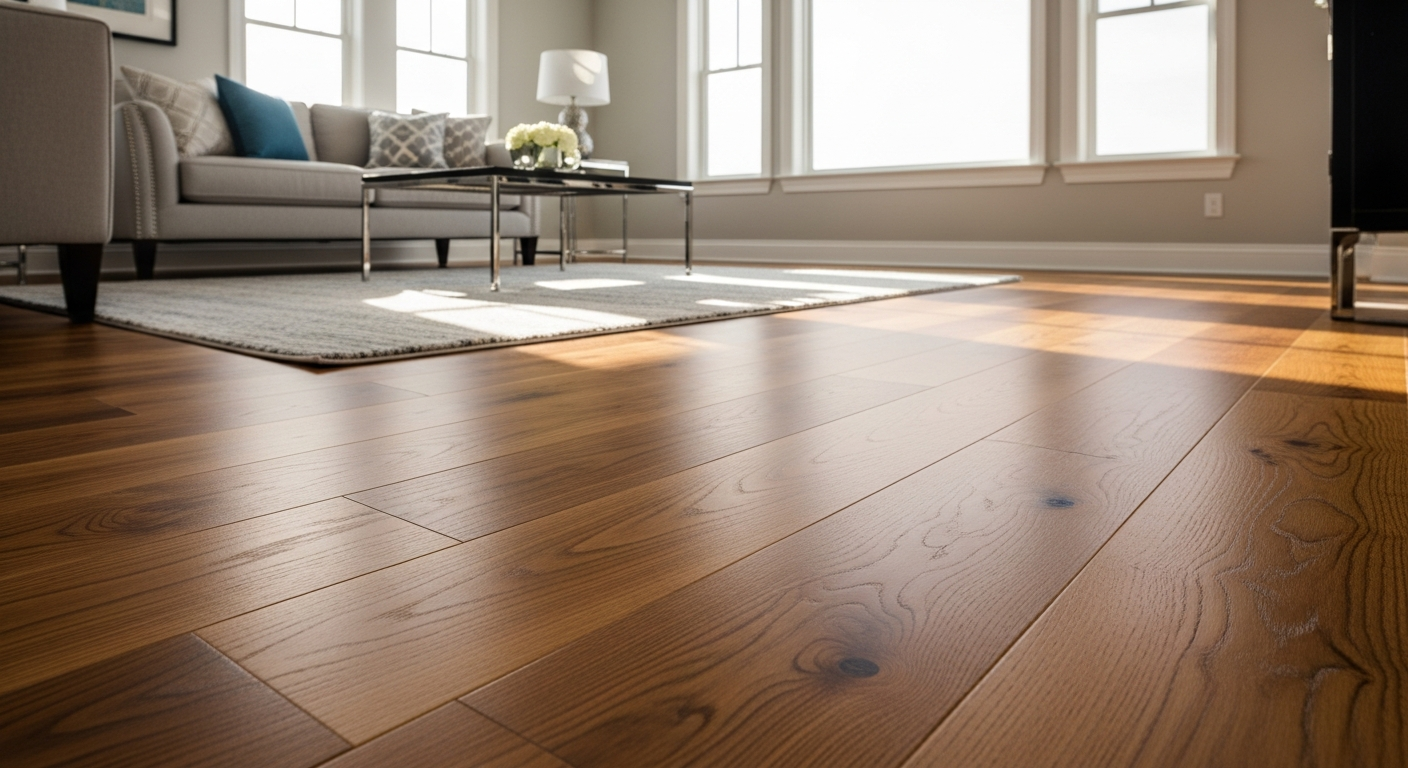

Hardwood flooring is flooring made with a real wood wear surface, either as solid planks or as engineered planks with a wood layer over a stable core.
Hardwood is the floor buyers love and homeowners treasure — and many St. Louis homes have beautiful original wood hiding under old carpet. Here's a guide to installing and refinishing hardwood.
Hardwood flooring never really goes out of style. It brings warmth and character to a home, it's the floor buyers most want to see, and — unlike almost any other flooring — it can be refinished again and again, lasting for generations. Many older St. Louis homes even have gorgeous original hardwood hiding beneath decades-old carpet. Whether you're installing new wood or reviving existing floors, here's what to know.
Solid vs. Engineered Hardwood
The first decision is which type of hardwood suits your home:
- Solid hardwood: milled from a single piece of wood, it can be sanded and refinished many times over its very long life. It's sensitive to moisture and humidity, so it's best above grade in living areas and bedrooms — not basements.
- Engineered hardwood: a real hardwood veneer over a stable plywood core. It handles humidity swings and moisture better than solid wood, can go over more subfloors, and still delivers an authentic look. It can be refinished, though fewer times than solid.
Choosing Your Wood, Color, and Finish
Hardwood offers enormous range. Species like oak (the classic, and what's under most older St. Louis carpet), hickory, maple, and walnut each have their own hardness and grain. Finishes run from matte to satin to glossy, and stain colors from pale natural tones to rich espresso. Wider planks read more modern; narrower strips are traditional. We help homeowners choose combinations that fit both their style and their home's era — an important consideration in St. Louis's many historic neighborhoods.
The Hidden Treasure: Refinishing Existing Floors
Before you replace old, tired-looking hardwood, know that refinishing is often possible — and far more economical than new flooring. Sanding down to bare wood and applying fresh stain and finish can make decades-old floors look brand new, and it preserves the character and value of original wood. If you've pulled up old carpet and found hardwood underneath, there's a good chance it can be brought back to life. It's one of the highest-return projects in an older home.
What to Expect From the Process
Installing or refinishing hardwood is a process worth understanding. New installation involves acclimating the wood to your home's humidity, preparing the subfloor, installing, and then sanding and finishing (for site-finished floors). Refinishing involves sanding, staining, and applying multiple protective coats. Both create dust and require the finish to cure, so rooms are out of use for a few days. A professional manages dust control, ensures proper acclimation (critical in our variable climate), and delivers a smooth, even finish.
Bring Out the Beauty of Real Wood
Whether you want to install new hardwood or restore the floors already in your home, quality workmanship makes all the difference between a floor that looks flawless and one that shows every flaw. We install and refinish hardwood throughout the St. Louis area, matching the wood and finish to your home and doing the prep work that makes the result last. For a free consultation, call STLBRC at (636) 999-7663.
Why does wood need time to acclimate?
Wood moves as it gains or loses moisture. Installing it before it adjusts to the home can lead to gaps or cupping. The installer should check moisture in both the wood and the subfloor. Follow the manufacturer's guidance on acclimation.
How do humid summers affect hardwood?
Humid summers can swell boards, and dry winters can open gaps. Keeping indoor humidity steady reduces this movement. Seasonal gaps that close again are normal. Persistent cupping often means a moisture source below.
Can water-damaged hardwood be saved?
Sometimes, if the water is removed quickly and the floor dries properly. Badly cupped or stained boards may need replacement. Have the source fixed and moisture tested before refinishing. Sanding a wet floor can make problems worse.
Should you refinish or replace an old hardwood floor?
Refinishing is usually the first option to check when boards are solid and tight. Sanding removes the worn finish and a thin layer of wood, then new stain and finish go on. Each sanding uses up some of the wood above the tongue. Very old floors that have been sanded many times may not have enough left. A flooring pro can pull a floor register or check an edge to see the remaining thickness. Replacement makes more sense when boards are loose, rotted, badly cupped or too thin to sand. Pet stains that soaked deep into the wood may need board replacement before refinishing. Engineered floors can sometimes be refinished too, depending on the wear layer thickness. Ask for that measurement before you decide, not after sanding starts.
How should you care for finished hardwood?
Use felt pads under furniture, mats at entries and a cleaner made for your finish. Wipe spills quickly.
- Avoid wet mopping and steam cleaners unless the finish maker allows them
- Trim pet nails to reduce scratches
- Keep indoor humidity steady through the seasons